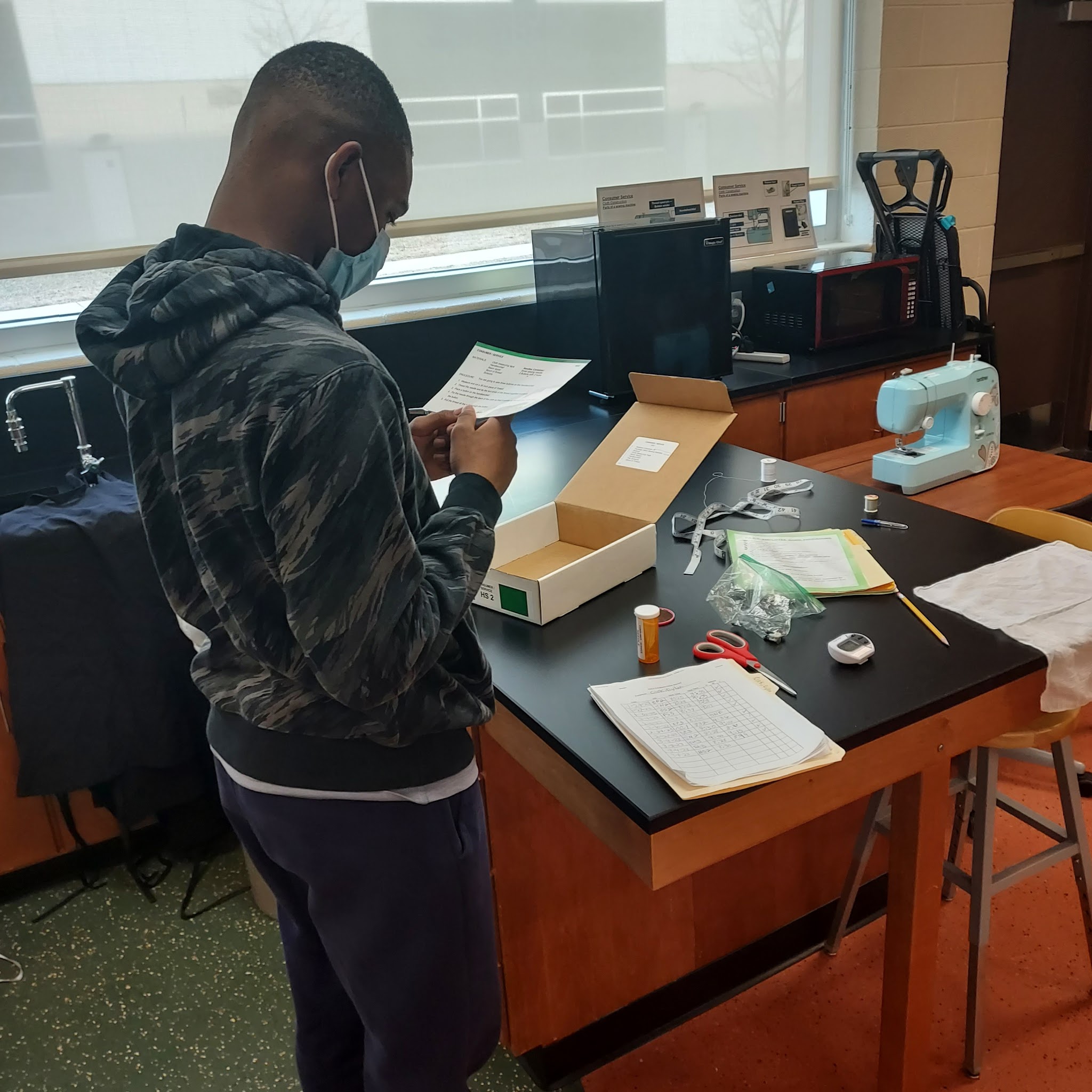
PAES assessment is performance-based, structured, and peer-reviewed. Supervisors observe authentic work across performance-based tasks and five vocational areas, and build a picture of each student's strengths over time.
How the assessment works
PAES is not a single test. It's a structured observation system that plays out over weeks or months, in a real working environment, using real tasks.
Step 1: Students enter the lab
Students are introduced to the lab, the tools, and the expectations. They start with a baseline session to calibrate.
Step 2: They work through the job cards
Across the assessment cycle, students rotate through the job cards within each of the five vocational areas. Each area contains 8 to 10 job cards, with six progressive difficulty levels. Each task is designed to surface different skill sets: following directions, technical task execution, working with others, quality control, accuracy, speed, problem-solving.
Step 3: Supervisors observe and score
Supervisors observe continuously. They score on specific, defined criteria using the PAES assessment system. Not subjective impressions. Not a single number. Evidence of behavior, skill, and growth.
Step 4: Data accumulates
Each session adds data. Students are seen in different tasks, on different days, in different moods. The picture deepens. Patterns emerge that a single paper test would never catch.
Step 5: The report is generated
At the end of the cycle, supervisors export the data to a detailed report that feeds into IEPs, transition plans, and goal-setting conversations.
What's scored
PAES captures evidence across four dimensions:
- Technical skill: can the student perform the task to standard?
- Work behaviors: attention, persistence, on-task time, transitions.
- Interpersonal: follows instruction, works with others, asks for help.
- Independence: levels of prompting, supervision, and self-direction required.
These four dimensions are the ones that matter in real workplaces. They're also the ones missed when assessment is paper-only.
Validation you can stand behind
The PAES assessment was published and peer-reviewed in Educational Measurement (1999), with a companion paper presented at AERA the same year. That is rare in this space. Many programs validate outcomes after an intervention. PAES validates the measurement itself, and 35+ years of field use since 1989 has refined the program and the scoring framework. Evidence quality has been the non-negotiable.
- 81% say PAES reveals strengths traditional assessment misses (C02)
- 89% report improved student motivation (C05)
- 74% trust PAES data for high-stakes decisions (C04)
- 75% say PAES reduces subjectivity in decisions about students (C14)
- 86% report students show increased transition readiness (C11)
Source: PAES Customer Impact Survey 2026 (n=308).
Time commitment
A full PAES assessment cycle typically runs 12 to 18 weeks, with students in the lab for 2 to 4 sessions per week. Shorter cycles are possible for specific use cases (summer programs, Pre-ETS short courses, workforce assessment). Every configuration still generates defensible, cumulative data.
Who scores
PAES is designed to be delivered by a trained special education teacher, CTE instructor, transition specialist, or VR counselor. Certification training is included in every lab package. No data scientist required.